Design
000
Back to Catalog

Data Platform

AvtoReyestr

Open-data vehicle analytics platform with admin operations and partner API tooling

https://avtoreyestr.org/
AvtoReyestr

Project Overview

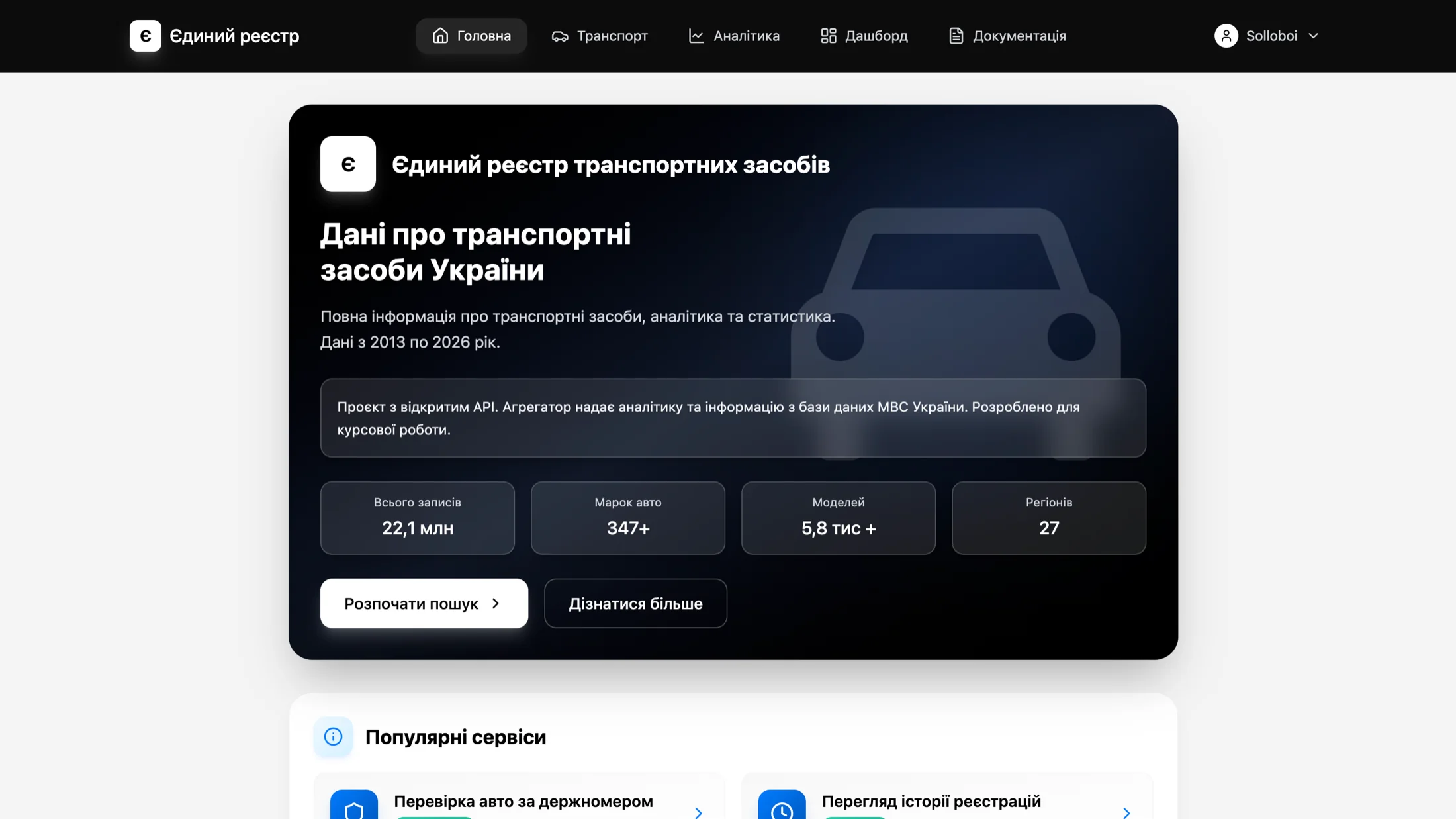
AvtoReyestr is more than a website. It is a complete data-driven platform built around open MVS vehicle records and shaped into a usable product for search, analytics, developer access, and internal operations. The local codebase confirms this clearly: a dedicated React web application for the public and authenticated experience, plus a separate FastAPI backend with PostgreSQL, Redis, Firebase-based identity, background preprocessing, partner-facing API endpoints, and a real admin module. From a product perspective, the project had to bridge public discoverability, gated access to sensitive functionality, analytical visualizations, developer documentation, and operational tooling inside one coherent system rather than a collection of disconnected pages.

Product Surfaces

website

Public Data Platform

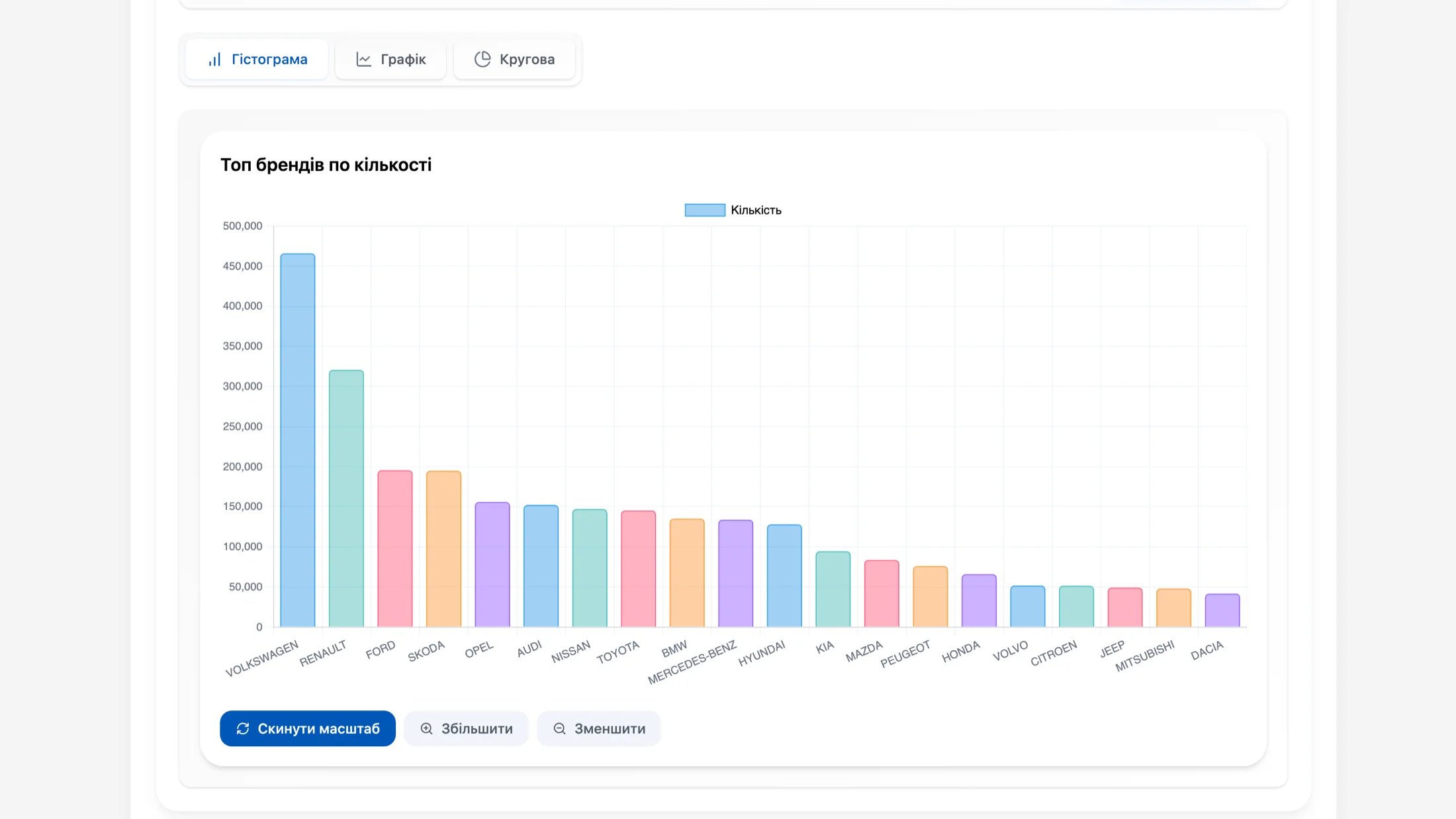
The public and authenticated web surface built around search, vehicle detail pages, analytical charts, dashboard previews, API documentation, legal pages, and conversion paths into the protected product experience.

https://avtoreyestr.org/
Public Data Platform
admin panel

Admin Control Panel

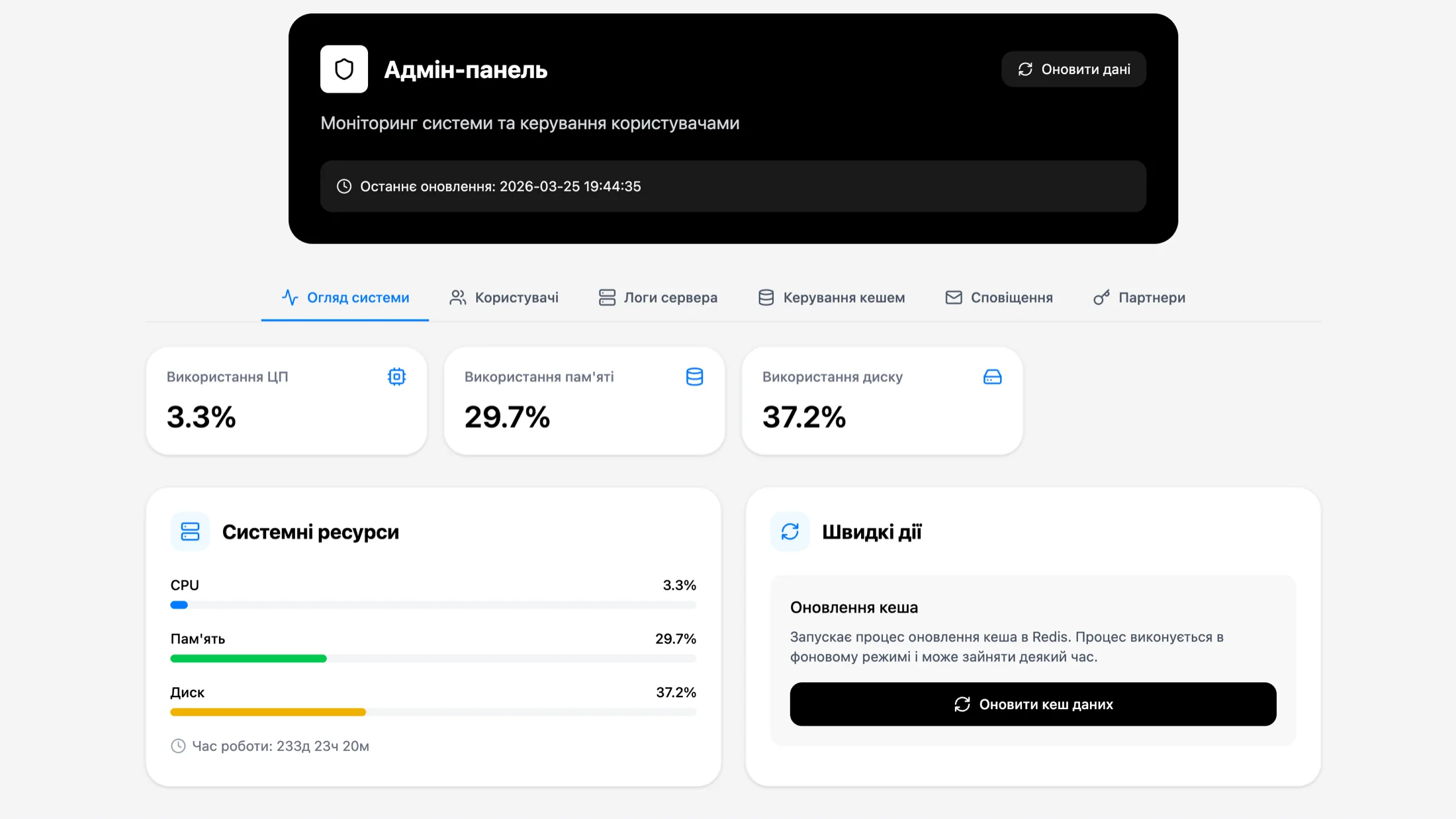
An internal operations surface for server stats, logs, user administration, Firebase sync flows, cache refresh, notifications, partner management, API-key lifecycle handling, and partner-usage analytics.

Internal admin panel
Admin Control Panel

The Challenge

Turn large, raw open vehicle-registry data into a product that feels usable and trustworthy for end users, not just technically available.

Combine public SEO-friendly pages, authenticated search and dashboard functionality, developer-facing API docs, and internal operations into one coherent platform.

Support real operational needs such as verified access, admin moderation, cache refresh, user synchronization, partner quotas, API keys, and request monitoring without collapsing the architecture into one fragile codebase.

The Execution

Built the web product as a dedicated Vite + React 19 application with route-based surfaces for home, vehicles, analytics, dashboard, vehicle detail, user garage, profile, authentication, legal pages, API requests, and documentation, all wrapped in responsive device-aware layout handling.

Implemented Firebase-backed authentication with email-verification enforcement, Google sign-in, protected routes, profile context, admin context, and front-end gating that lets public preview pages remain indexable while keeping sensitive features behind verified access.

Developed user-facing data workflows including registration-number search with transliteration normalization, detailed vehicle records, history views, favorites and personal garage flows, dashboard summaries, chart previews, and CSV export from the vehicle-history surface.

Built the backend in FastAPI with async SQLAlchemy over PostgreSQL, Redis-backed caching, background preprocessing jobs, scheduled refresh orchestration, email flows, Firebase Admin integration, and separate route groups for vehicles, analytics, dashboard, favorites, auth, users, sync, admin, and partner APIs.

Delivered a real admin and partner-operations layer with server statistics, structured logs, user-role management, deletion flows, outbound notifications, Firebase backfill and sync, partner CRUD, API-key creation and rotation, quota controls, rate limiting, and persistent partner usage logging.

The Outcome

A live multi-surface vehicle-data product that combines search, analytics, documentation, authentication, and operational tooling in a way that feels like a platform rather than a static information site.

A maintainable split between web and server responsibilities, backed by Redis caching and preprocessing, which makes heavy analytical views and repeated data access materially more practical in production.

A stronger long-term foundation for growth through partner API access, admin workflows, verified-user handling, developer documentation, and a product model that can expand beyond the initial public website.

Clear technical direction. Sharper delivery.

The next version of your systems starts here.

Start with the bottleneck, the brief, or the unstable architecture. We will help turn it into a cleaner technical path.